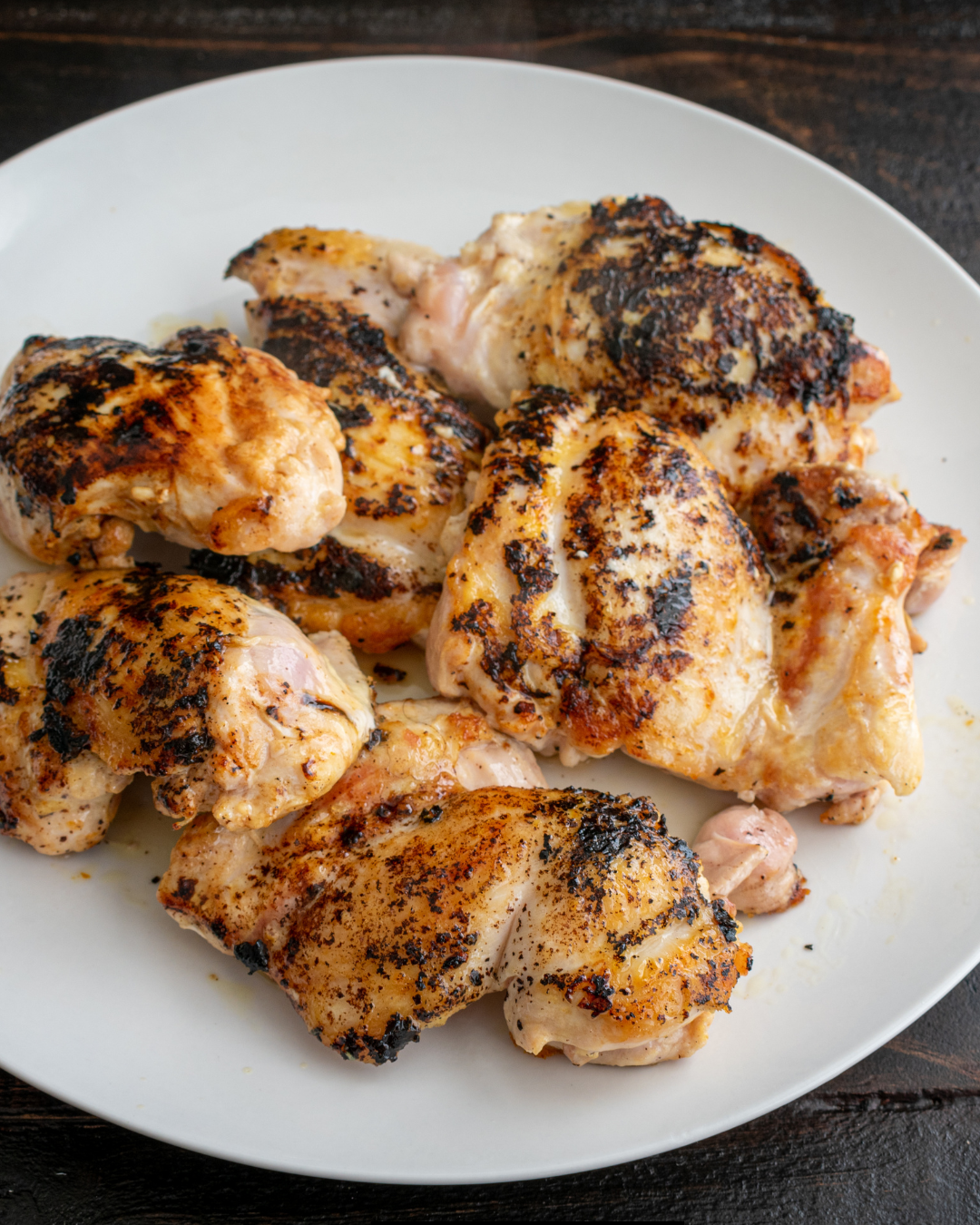
Skillet Boneless skinless chicken thighs are my weeknight go-to for exactly this reason. They cook faster than bone-in options, soak up flavor like a sponge, and stay tender no matter how you prepare them. Plus, when seared to golden perfection in a skillet, they develop that gorgeous caramelized crust that feels fancy—but doesn’t require hours in the kitchen.
Table of Contents
How to make Skillet Boneless Skinless Chicken Thigh
Skillet Boneless Skinless Chicken Thigh is a dish made by cooking boneless, skinless chicken thighs in a skillet or frying pan until they are browned on the outside and juicy on the inside.
Ingredients
For the chicken
- 6 boneless, skinless chicken thighs
- 2 tbsp olive oil (or vegetable/canola oil)
- 1 tbsp butter (optional, for extra flavor and browning)
Basic seasoning mix
- 1 tsp salt (start here; add more to taste)
- ½ tsp black pepper
- 1 tsp garlic powder
- 1 tsp onion powder
- 1 tsp smoked or sweet paprika
- ½ tsp dried thyme or Italian seasoning
- ¼ tsp chili powder or cayenne (optional, for a bit of heat)
Optional flavor boosters
- 2–3 cloves garlic, minced (for the pan)
- Juice of ½ lemon or 1–2 tbsp lemon juice
- ¼ cup chicken broth or water (for a quick pan sauce)
- Fresh herbs: parsley, thyme, or cilantro for garnish
- 1–2 tsp honey or brown sugar (if you prefer a slightly sweet glaze)
Instructions
1. Prepare the chicken
- Trim excess fat from the chicken thighs if needed.
- Pat dry with paper towels. Dry surfaces sear better and give a nice crust.
- Place the thighs in a bowl or on a plate and sprinkle the seasoning mix evenly on both sides.
- Gently rub it in so it sticks to the meat.
- If you have time, let the seasoned chicken sit for 10–15 minutes at room temperature.
- This helps the seasoning penetrate and promotes more even cooking.
2. Heat the skillet
- Place a large skillet (cast iron or stainless steel if possible) over medium-high heat.
- Add olive oil and let it heat until it shimmers.
- If using butter, add it once the oil is hot; it should melt and foam, but not burn.
- Swirl the pan so the bottom is evenly coated.
3. Sear the chicken
- Carefully place the chicken thighs in the hot skillet in a single layer.
- Don’t overcrowd; cook in batches if needed.
- Lay them smooth side down first for better browning.
- Do not move them for 4–6 minutes.
- You’re building that golden-brown crust. If you try to flip too early, they’ll stick.
- Once the underside is nicely browned and releases easily, flip each piece.
4. Finish cooking
- After flipping, reduce heat to medium.
- Optional: add minced garlic to the side of the pan (not directly on the chicken) and sauté for 30 seconds so it doesn’t burn.
- Continue cooking for another 5–7 minutes, depending on thickness.
- Check the internal temperature with a meat thermometer:
- You’re aiming for 165°F (74°C) in the thickest part.
- If the outside is browning too fast while the inside is still undercooked:
- Reduce heat to medium-low and cover the pan for a few minutes, or
- Splash in 2–4 tbsp of chicken broth or water, cover, and let it gently steam to finish.
5. Optional quick pan sauce
- Remove the cooked chicken to a plate and tent loosely with foil.
- With the pan still on medium heat, add:
- ¼ cup chicken broth or water
- 1–2 tsp lemon juice
- 1–2 tsp butter (optional)
- Scrape up the browned bits from the bottom with a wooden spoon.
- Let the liquid simmer and reduce slightly (2–3 minutes).
- Taste and adjust with a pinch of salt, pepper, or a touch of honey if you like.
- Spoon the sauce over the chicken thighs before serving.
Ingredients Substitutes
Cooking doesn’t need to be stressful, even if you’re out of specific ingredients!
1. Chicken Thighs
If you don’t have boneless, skinless chicken thighs, don’t worry! Here are alternatives:
- Chicken Breasts: Slice them horizontally into thinner pieces to ensure even cooking, as chicken breasts are thicker and can dry out quickly. Cook times and temperature remain the same, but monitor carefully to avoid overcooking.
- Bone-In Chicken Thighs: They work just as well! You’ll need to adjust the cooking time slightly, as bone-in thighs cook slower. Sear for 5–7 minutes per side, then cover the pan and lower the heat to finish cooking (internal temperature: 165°F/74°C).
- Chicken Drumsticks or Wings: These can be cooked in a skillet with similar seasoning and method, though they may require more time. They’re great for finger food-style meals!
- Chicken Tenderloins: These smaller pieces cook faster, roughly 4–6 minutes per side. Ensure not to overcook, as they can dry out easily.
- Turkey Cutlets: Perfect for leaner protein. Thin turkey slices cook similarly to chicken breasts, but may need seasoning tweaks (like more salt or herbs) to complement their milder flavor.
2. Olive Oil
Olive oil is commonly used for skillet cooking and adds rich flavor, but you can swap it out easily:
- Vegetable/Canola Oil: Neutral oils that work perfectly for searing chicken without adding extra flavor.
- Avocado Oil: Has a high smoke point and is ideal for high-heat cooking, plus it’s nutrient-rich.
- Butter: Gives an amazing richness and golden hue. Be cautious about using it alone for cooking at high heat, as it may burn. Combine it with a neutral oil for better control.
- Coconut Oil: Adds a subtle tropical flavor that pairs well with Asian or Indian-inspired variations.
3. Butter
Butter enhances flavor, but it’s optional and can usually be replaced:
- Ghee: A clarified butter that won’t burn as quickly. Perfect for high-heat cooking.
- Olive Oil or Extra Oil: Skip the butter altogether and use more oil for searing and flavor.
- Plant-Based Margarine: Works great for vegan or dairy-free substitutions.
4. Salt
Salt is a universal seasoning, but if you’re looking for alternatives:
- Kosher Salt or Sea Salt: Best substitutes for regular salt, providing a similar flavor boost.
- Soy Sauce: Adds saltiness and depth to the seasoning; works well with Asian-inspired variations.
- Tamari or Liquid Aminos: Great gluten-free alternatives to soy sauce, and can replace salt in a pinch.
5. Garlic Powder
If you’re out of garlic powder, try these substitutions:
- Fresh Garlic: Use 2–3 cloves minced in place of 1 tsp garlic powder, adding it to the skillet during the cooking process (not while seasoning).
- Garlic Salt: Use more sparingly and balance with less regular salt since it’s saltier.
- Onion Powder: Adds a similar savory profile—use in equal amounts if garlic isn’t available.
6. Smoked/Sweet Paprika
Paprika adds warmth and a mild smoky or sweet flavor, but here’s what you can use instead:
- Cayenne Pepper: Use sparingly (start with ¼ tsp) if you like spicy heat.
- Chili Powder: Offers a deeper earthy flavor that pairs well with many cuisines.
- Ground Cumin: Adds a warm, smoky element that complements chicken well.
- Turmeric: Provides a slightly bitter earthiness, along with a golden color.
7. Thyme or Italian Seasoning
These herbs bring depth and aroma to the chicken. Try the following substitutes:
- Rosemary: Chop finely; ½ tsp rosemary is a great substitute for dried thyme.
- Oregano: Earthy flavor similar to Italian seasoning. Use ½ tsp as needed.
- Parsley: Add as a garnish or mix in for a fresh touch.
- Fresh basil or cilantro: Use for Mediterranean or Asian variations respectively.
8. Lemon Juice
Lemon juice adds brightness, cutting through rich flavors. If you’re out, try:
- Lime Juice: Similar acidity that works great with most variations.
- Vinegar (White, Apple Cider, or Balsamic): Use only 1 tsp, as vinegar is more intense than lemon juice.
- White Wine: Adds acidity and complexity; 2–3 tsp works well for deglazing.
9. Chicken Broth
Chicken broth is often used for deglazing or making a sauce. Here’s what works if you don’t have it:
- Water: Neutral but gets the job done. You may need to boost flavor with extra seasoning, garlic, or herbs.
- Vegetable Broth: Great if you don’t have chicken broth. Adds mild flavor akin to water but slightly more depth.
- White Wine: Perfect for deglazing the pan and adding a subtle note of flavor.
Final Thoughts
Substitutions allow endless creativity—you can adapt the Skillet Boneless Skinless Chicken Thighs recipe to what’s in your pantry and make it your own!
More Chicken Recipes:
- Chicken and Rice Casserole Recipe with Cream of Chicken
- Copycat Zab’s Chicken Ranch Nacho Fries Recipe

Ingredients
For the chicken
- 6 boneless, skinless chicken thighs
- 2 tbsp olive oil
- 1 tbsp butter
Basic seasoning mix
- 1 tsp salt
- ½ tsp black pepper
- 1 tsp garlic powder
- 1 tsp onion powder
- 1 tsp smoked or sweet paprika
- ½ tsp dried thyme or Italian seasoning
- ¼ tsp chili powder
Optional flavor boosters
- 2–3 cloves garlic, minced
- Juice of ½ lemon or 1–2 tbsp lemon juice
- ¼ cup chicken broth
- Fresh herbs: parsley, thyme
- 1–2 tsp honey or brown sugar
Instructions
1. Prepare the chicken
- Trim excess fat from the chicken thighs if needed.
- Pat dry with paper towels. Dry surfaces sear better and give a nice crust.
- Place the thighs in a bowl or on a plate and sprinkle the seasoning mix evenly on both sides.
- Gently rub it in so it sticks to the meat.
- If you have time, let the seasoned chicken sit for 10–15 minutes at room temperature.
- This helps the seasoning penetrate and promotes more even cooking.
2. Heat the skillet
- Place a large skillet (cast iron or stainless steel if possible) over medium-high heat.
- Add olive oil and let it heat until it shimmers.
- If using butter, add it once the oil is hot; it should melt and foam, but not burn.
- Swirl the pan so the bottom is evenly coated.
3. Sear the chicken
- Carefully place the chicken thighs in the hot skillet in a single layer.
- Don’t overcrowd; cook in batches if needed.
- Lay them smooth side down first for better browning.
- Do not move them for 4–6 minutes.
- You’re building that golden-brown crust. If you try to flip too early, they’ll stick.
- Once the underside is nicely browned and releases easily, flip each piece.
4. Finish cooking
- After flipping, reduce heat to medium.
- Optional: add minced garlic to the side of the pan (not directly on the chicken) and sauté for 30 seconds so it doesn’t burn.
- Continue cooking for another 5–7 minutes, depending on thickness.
- Check the internal temperature with a meat thermometer:
- You’re aiming for 165°F (74°C) in the thickest part.
- If the outside is browning too fast while the inside is still undercooked:
- Reduce heat to medium-low and cover the pan for a few minutes, or
- Splash in 2–4 tbsp of chicken broth or water, cover, and let it gently steam to finish.
5. Optional quick pan sauce
- Remove the cooked chicken to a plate and tent loosely with foil.
- With the pan still on medium heat, add:
- ¼ cup chicken broth or water
- 1–2 tsp lemon juice
- 1–2 tsp butter (optional)
- Scrape up the browned bits from the bottom with a wooden spoon.
- Let the liquid simmer and reduce slightly (2–3 minutes).
- Taste and adjust with a pinch of salt, pepper, or a touch of honey if you like.
- Spoon the sauce over the chicken thighs before serving.
Discover more from Heavnly Foods
Subscribe to get the latest posts sent to your email.