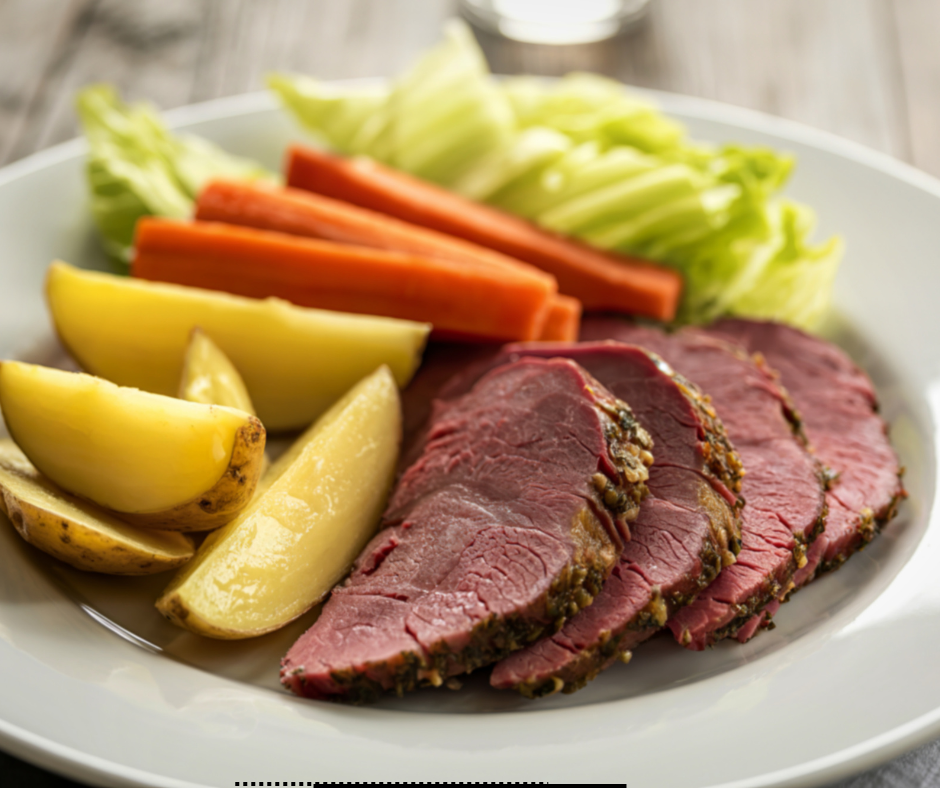
This Boiled Corned Beef and Cabbage recipe is more than just a meal—it’s a connection to tradition. Though it’s often associated with Irish-American culture, its appeal goes far beyond that. Tender, melt-in-your-mouth corned beef paired with the wholesome goodness of cabbage, carrots, and potatoes is a combination that anyone can enjoy.
Table of Contents
How to make Boiled Corned Beef and Cabbage
Boiled Corned Beef and Cabbage is a classic comfort dish made by simmering cured beef brisket (called corned beef) with cabbage and other vegetables until everything is tender and flavorful.
Ingredients
For the Corned Beef:
- 3-4 lb corned beef brisket (with or without seasoning packet)
- 4 cups water (you can substitute part of this with beer, beef broth, or chicken stock for added flavor)
- 1 tbsp pickling spices (if not provided with the corned beef; common spices include mustard seeds, coriander, bay leaves, and cloves)
- 1 onion, peeled and quartered
- 3 garlic cloves, smashed
- Optional: 1-2 tsp black peppercorns
For the Vegetables:
- 1 small head of cabbage, cut into wedges
- 6 medium potatoes, peeled and halved (Yukon Gold, red potatoes, or even fingerlings work well)
- 4 large carrots, peeled and cut into 2-inch chunks
- Optional: 2 parsnips or turnips, peeled and chopped
- Optional: Fresh parsley, for garnish
Instructions
- Prepare the Corned Beef: Rinse the corned beef brisket under cold water to remove excess brine. This step prevents the dish from becoming overly salty. Place the corned beef in a large stockpot or Dutch oven.
- Simmer the Corned Beef: Add 4 cups of water (or a mix of water and beer/broth) to the pot, ensuring that the brisket is fully submerged. Add the pickling spices (or the seasoning packet, if included), onion, garlic, and peppercorns. Bring the liquid to a boil over medium-high heat.
- Reduce to a gentle simmer, cover, and cook for 2 ½ to 3 hours (or until the corned beef is fork-tender). Check occasionally to ensure the liquid doesn’t run too low—add more water if needed.
- Add the Vegetables: When the beef has about 30-40 minutes left to cook, begin adding the vegetables. First, add the potatoes and carrots, as they take longer to cook. Let them cook for 15 minutes.
- Add the cabbage wedges during the last 15-20 minutes of cooking, as they don’t take as long to soften.
- Rest and Slice the Corned Beef: When the corned beef is done, carefully remove it from the pot and place it on a cutting board. Let it rest for 10-15 minutes before slicing. This helps lock in the juices. Slice the brisket against the grain into thin slices for the best texture.
- Serve: Arrange the corned beef slices on a large platter, surrounded by the boiled cabbage, potatoes, and carrots. Garnish with fresh parsley, if desired, and serve with mustard or horseradish on the side.
Tips for Making the Perfect Boiled Corned Beef and Cabbage
Here are some helpful pointers to make your Boiled Corned Beef and Cabbage truly exceptional:
- Choose the Brisket Wisely: Corned beef brisket typically comes in two cuts—point-cut (fattier, with a richer flavor) and flat-cut (leaner and easier to slice). Choose based on your preference, but keep in mind that flat-cut brisket is easier to work with for uniform slices.
- Don’t Rush the Cooking Process: Corned beef is best when cooked low and slow. Simmering it ensures the meat turns out tender and juicy. Be patient!
- Control the Saltiness: Corned beef can sometimes be too salty right out of the brine. Rinsing the brisket before cooking helps reduce salt levels. Some even soak the brisket in water for an hour.
- Boost Flavor: Substituting part of the water with beer, chicken broth, or beef stock will give the dish a deeper, richer flavor. Irish stout (like Guinness) is a popular choice.
- Don’t Overcook the Vegetables: Take care to add the vegetables at the right time so they remain tender and flavorful without turning to mush. Remember: potatoes and carrots take longer, while cabbage cooks quickly.
- Leftovers Are Your Friend: Leftover corned beef is incredibly versatile. Use it for sandwiches (hello, Reuben!), hash, or even corned beef soup. Store leftovers in an airtight container in the fridge for up to 3 days.
What to serve with
Boiled corned beef and cabbage is already a hearty, flavorful meal, but the right sides and accompaniments can take it to the next level. Whether you’re preparing it for a festive St. Patrick’s Day dinner or a cozy weekend meal, the right pairings can complement the dish and elevate your dining experience.
1. Starchy Sides to Soak Up the Flavor
Though boiled potatoes are traditionally paired with corned beef and cabbage, you can also serve other starches to provide variety and absorb the flavorful juices. Here are a few favorites:
- Mashed Potatoes with Butter or Horseradish: For a creamier, comforting side, mashed potatoes make an excellent alternative to boiled potatoes. A dollop of horseradish in the mash ties the flavors beautifully to the corned beef.
- Irish Soda Bread: A must-have with Irish-inspired meals, soda bread is slightly sweet, tender, and perfect for soaking up the broth from the pot. You can serve it with softened butter or even a honey-butter spread.
- Buttered Noodles: Simple and satisfying, buttered egg noodles are great for kids or picky eaters. Toss with parsley for a touch of brightness.
2. Leafy Greens and Fresh Salads
Adding a fresh or tangy component can cut through the richness of the meat and complement the boiled cabbage:
- Mixed Greens with Dijon Vinaigrette: Create a refreshing side salad with mixed greens, arugula, and a tangy Dijon mustard vinaigrette. The acidity balances the richness of the meat.
- Coleslaw: A crisp and crunchy coleslaw, especially with a vinegar-based dressing (as opposed to creamy), adds a refreshing bite to the plate.
- Sautéed Spinach or Kale: Lightly sautéed leafy greens with garlic or onion blend perfectly without overpowering the main dish.
Ingredients Substitutes
Making boiled corned beef and cabbage is a timeless tradition, but sometimes you may need to adjust the recipe due to dietary needs, ingredient availability, or personal preference. Fear not—this dish is versatile, and you can easily make substitutions while still keeping the spirit and flavors of the meal intact.
1. Corned Beef Substitutes
The star of the dish is corned beef brisket, which is brined beef cured with salt and spices. If it’s unavailable or you prefer an alternative option, here are some suitable substitutes:
a. Uncured Beef Brisket:
- If you can’t find pre-brined corned beef, use a regular brisket. You won’t have the salty, pickled flavor naturally, but you can approximate it by seasoning with salt, pepper, garlic, and spices like mustard seeds, coriander, and bay leaves.
- Brine the brisket at home a day or two before cooking. Soak the beef in a water and salt solution with pickling spices to infuse the flavors.
b. Beef Chuck Roast or Short Ribs:
- For a similar texture to brisket, beef chuck roast is an excellent substitute. It’s flavorful and cooks down tender when boiled or braised alongside vegetables.
- Short ribs, though slightly fattier than brisket, also work beautifully when slow-cooked.
c. Pork Shoulder or Ham:
- Pork shoulder or ham is a great alternative for those who enjoy a similar saltiness and depth of flavor. Use a smoked shoulder or ham if you want a fully cured meat flavor.
- Be careful not to over-salt the dish, as cured pork can already be quite salty.
d. Turkey Legs or Breast (for a Leaner Option):
If you want to skip beef or pork entirely, turkey is a healthier but equally flavorful alternative. Turkey legs or breast can be simmered with the same spices, giving a lighter version of the dish.
Vegetarian/Vegan Substitutes for Corned Beef:
- Seitan: For plant-based eaters, seitan (seasoned wheat gluten) can mimic the texture of corned beef and is very flavorful when boiled with traditional spices.
- Jackfruit: Canned young jackfruit is an excellent plant-based alternative that absorbs the seasoning flavors well.
- Firm Tofu: Marinate your tofu with spices and liquid smoke for added flavor before simmering.
2. Cabbage Substitutes
Cabbage is a classic part of the dish, but you can replace it with other vegetables if needed:
a. Kale or Collard Greens: Kale or collard greens can serve as leafy substitutes for cabbage. Add them in the last 5-10 minutes of cooking, as they cook faster than cabbage.
b. Brussels Sprouts: Brussels sprouts are a perfect substitute, offering a similar texture and flavor. Halve or quarter them and boil them with the other vegetables.
c. Swiss Chard: Swiss Chard is another leafy green that works well. It’s slightly more delicate than cabbage, so add it toward the end of cooking.
3. Potato Substitutes
Boiled potatoes are another traditional part of this meal, but there are plenty of ways to switch them out:
a. Sweet Potatoes or Yams: Swap in sweet potatoes or yams for a sweeter, heartier variation of the dish. They add a vibrant color and balance the saltiness of the corned beef.
b. Turnips or Rutabagas: Turnips and rutabagas are great low-carb alternatives to potatoes. They have a subtly sweet, earthy flavor that fits the dish well.
c. Cauliflower (Low-Carb Option): If you’re looking for a keto-friendly substitute, swap out potatoes for chunks of cauliflower. They’ll absorb the flavorful broth and maintain some bite.
Final Thoughts
Boiled corned beef and cabbage is one of those meals that not only satisfies your hunger but also feels like a warm hug.
More Meat Recipes:

Ingredients
For the Corned Beef:
- 3-4 lb corned beef brisket
- 4 cups water
- 1 tbsp pickling spices
- 1 onion, peeled and quartered
- 3 garlic cloves, smashed
- Optional: 1-2 tsp black peppercorns
For the Vegetables:
- 1 small head of cabbage, cut into wedges
- 6 medium potatoes, peeled and halved
- 4 large carrots, peeled and cut into 2-inch chunks
- Optional: 2 parsnips or turnips, peeled and chopped
- Optional: Fresh parsley
Instructions
- Prepare the Corned Beef: Rinse the corned beef brisket under cold water to remove excess brine. This step prevents the dish from becoming overly salty. Place the corned beef in a large stockpot or Dutch oven.
- Simmer the Corned Beef: Add 4 cups of water (or a mix of water and beer/broth) to the pot, ensuring that the brisket is fully submerged. Add the pickling spices (or the seasoning packet, if included), onion, garlic, and peppercorns. Bring the liquid to a boil over medium-high heat.
- Reduce to a gentle simmer, cover, and cook for 2 ½ to 3 hours (or until the corned beef is fork-tender). Check occasionally to ensure the liquid doesn’t run too low—add more water if needed.
- Add the Vegetables: When the beef has about 30-40 minutes left to cook, begin adding the vegetables. First, add the potatoes and carrots, as they take longer to cook. Let them cook for 15 minutes.
- Add the cabbage wedges during the last 15-20 minutes of cooking, as they don’t take as long to soften.
- Rest and Slice the Corned Beef: When the corned beef is done, carefully remove it from the pot and place it on a cutting board. Let it rest for 10-15 minutes before slicing. This helps lock in the juices. Slice the brisket against the grain into thin slices for the best texture.
- Serve: Arrange the corned beef slices on a large platter, surrounded by the boiled cabbage, potatoes, and carrots. Garnish with fresh parsley, if desired, and serve with mustard or horseradish on the side.