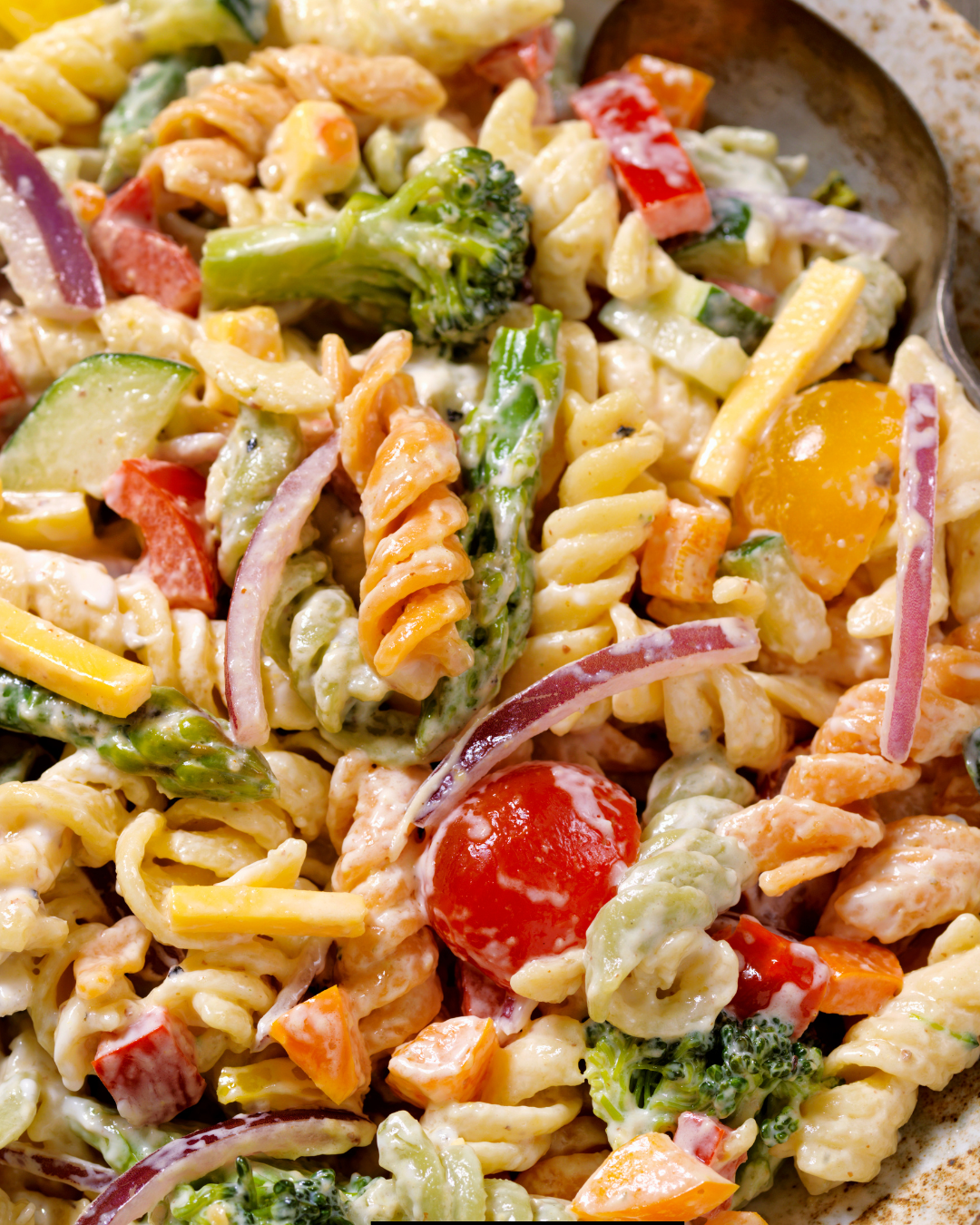
This Thai Pasta Salad recipe combines the satisfying heartiness of pasta with the bold, refreshing flavors of Thai cuisine. Think crunchy veggies, a zesty peanut-lime dressing, and a sprinkle of fresh herbs that make every bite sing.
Table of Contents
How to make Thai pasta salad
Thai pasta salad is a fusion-style pasta salad that combines cooked pasta with fresh vegetables and bold Thai-inspired flavors.
Ingredients
- Pasta: 8 ounces of bow-tie (farfalle), linguine, or spaghetti. Rice noodles are also a great gluten-free option.
Vegetables:
- 1 cup shredded carrots
- 1 cup thinly sliced bell peppers (red, yellow, or green)
- 1 cup thinly sliced cucumbers
- 1 cup shredded purple cabbage (optional for color)
- ½ cup chopped snap peas
- ¼ cup thinly sliced red onion or green onions
For the Protein (Optional): 1 cup cooked chicken (grilled or shredded), shrimp, or tofu for extra heartiness.
For the Dressing:
- 3 tablespoons creamy peanut butter (or almond butter for a twist)
- 2 tablespoons freshly squeezed lime juice
- 2 tablespoons soy sauce or tamari (adjust for saltiness)
- 1 tablespoon sesame oil
- 1 tablespoon honey or maple syrup (for sweetness)
- 1 clove garlic, minced
- 1 teaspoon grated fresh ginger
- ¼ teaspoon red chili flakes (adjust for spice level)
Garnishes:
- ¼ cup chopped fresh cilantro
- 2 tablespoons chopped fresh mint or Thai basil (optional but highly recommended)
- ¼ cup roasted peanuts or cashews, roughly chopped
- Sesame seeds for sprinkling
Instructions
- Bring a large pot of salted water to a boil. Cook your chosen pasta according to package instructions until al dente.
- Drain and rinse under cold water to stop the cooking process and cool the pasta for the salad. Set aside.
- While the pasta cooks, wash and slice all the vegetables and herbs. Organize them in a large mixing bowl.
- In a small bowl or jar, whisk together the peanut butter, lime juice, soy sauce, sesame oil, honey, garlic, ginger, and chili flakes. Adjust seasoning to taste—add more lime for tartness, honey for sweetness, or soy sauce for saltiness. If the dressing seems too thick, add 1-2 teaspoons of warm water to thin it out.
- Add the cooked pasta to the bowl of vegetables. Pour the dressing over the pasta and vegetables. Toss everything together until well-coated.
- If adding protein (chicken, shrimp, or tofu), mix it in now.
- Sprinkle cilantro, mint, roasted nuts, and sesame seeds over the top for added flavor and crunch.
- Serve immediately or refrigerate for 30 minutes to allow the flavors to meld together.
Tips for Perfect Thai Pasta Salad
- If you enjoy heat, go heavier on red chili flakes or add a dash of sriracha to the dressing. For a milder version, reduce the chili flakes or omit them entirely.
- This salad gets even better after a few hours of chilling, as the flavors have more time to develop. If making ahead, keep the garnishes separate and add them right before serving to preserve freshness.
- Rice noodles or soba noodles both work beautifully and give a more authentic Asian-inspired touch.
- Roasted peanuts or cashews are essential for a texture boost, but you can also try fried shallots or crispy wonton strips for something different.
- If you want a vegan option, stick with tofu or edamame. For meat-lovers, grilled chicken or lightly sautéed shrimp complement the Thai flavors perfectly.
What to serve with
Thai Pasta Salad is a wonderfully versatile dish, making it a great option for potlucks, family dinners, or as a stand-alone meal. However, pairing it with complementary dishes can elevate your dining experience even more.
A. Grilled Chicken: Seasoned with Thai-inspired spices like lemongrass, garlic, ginger, or a touch of fish sauce, grilled or roasted chicken complements the flavors of the salad beautifully. Try Thai chicken satay skewers with a peanut dipping sauce for a perfect match!
B. Thai Shrimp Skewers: Grilled shrimp marinated in garlic, lime juice, chili, and a little soy sauce pair well with the nutty and tangy flavor profile of the salad.
C. Crispy Tofu or Tempeh: For vegans and vegetarians, pan-fried or air-fried tofu/tempeh glazed with a sweet chili or soy-based sauce brings protein and crunch without overpowering the salad.
D. Baked Salmon with Lime and Soy Glaze: A filet of baked or grilled salmon drizzled with lime-soy glaze or a touch of honey pairs wonderfully with the refreshing brightness of the salad.
Ingredients Substitutes
One of the best aspects of Thai pasta salad is its flexibility. You can adjust the ingredients based on dietary preferences, what’s available in your pantry, or to mix up the flavors.
1. Pasta
The pasta is the heart of this dish, but it’s easy to swap based on dietary needs or what’s on hand.
- Substitute with Other Pasta Types: If you don’t have bow-tie or spaghetti, you can use penne, fusilli, or any short pasta shape. These retain the dressing well because of their texture.
- Use Rice Noodles: To give a more authentic Thai feel (and for gluten-free eaters), substitute Italian pasta with flat rice noodles or vermicelli. Soak or boil them as per instructions.
- Try Zucchini Noodles or Veggie Noodles: For a low-carb option, use spiralized zucchini, cucumber, or sweet potato noodles. These will make the dish lighter and fresher.
- Quinoa or Couscous: Not technically pasta, but quinoa or couscous can give the dish a unique grain-based twist, complementing the Thai-inspired flavors.
2. Vegetables
The veggies in this salad add both crunch and a pop of color, but feel free to get creative with substitutes.
- Carrots: If you don’t have shredded carrots, thinly sliced radishes or julienned sweet potato work as an alternative.
- Bell Peppers: Any color of bell pepper works, but if you’re out, try thinly sliced zucchini, yellow squash, or broccoli florets.
- Cabbage: While purple cabbage adds a beautiful color, it can be replaced with green cabbage, Napa cabbage, or coleslaw mix.
- Snap Peas: Swap with green beans, asparagus tips, or edamame for a similar texture and crunch.
- Cucumbers: Zucchini slices or thinly sliced celery sticks can replicate the crunch of a cucumber. If you want a sweeter profile, try using chopped apples.
- Red Onion: Use green onions, thinly sliced shallots, or even chives as an alternative.
3. Protein (Optional)
Adding protein makes this salad more filling. If you don’t have options like chicken, shrimp, or tofu, here are alternatives:
- Chicken: Swap grilled chicken for leftover rotisserie chicken, oven-baked turkey, or even poached eggs for a softer protein option.
- Shrimp: Try scallops, fish filets, or canned tuna for a seafood alternative.
- Tofu: Use tempeh, chickpeas, or any plant-based meat substitute for a vegan-friendly protein.
- Edamame: Substitute with green peas, roasted chickpeas, or fava beans if you’re looking for a meat-free addition with a touch of protein.
4. Dressing
The Thai-inspired dressing is a key element of this salad. While it combines specific ingredients for that balance of sweet, tangy, salty, and nutty, there are plenty of substitutes if you don’t have some of the staples on hand.
Nut Butter Substitutes:
- Peanut Butter: If you’re out of peanut butter or have allergies, almond butter, cashew butter, or sunflower seed butter makes a great alternative. For a nut-free option, try tahini (sesame seed paste).
- Sesame Oil: You can replace sesame oil with olive oil, avocado oil, or a neutral vegetable oil. While sesame oil lends a nutty aroma, these alternatives will still work well in the dressing.
Soy Sauce Substitutes:
- For a gluten-free option, use tamari or coconut aminos.
- If you don’t have any of these, Worcestershire sauce (use sparingly) or miso paste with a bit of water can work as substitutes.
Sweetener Substitutes:
- Replace honey with maple syrup, agave nectar, or brown sugar to add sweetness.
- If you’re cutting sugar, try a sugar-free syrup or stevia (use cautiously as it is more potent).
Lime Juice Substitutes:
- Lemon juice is the closest substitute, but you can also use rice vinegar or apple cider vinegar for acidity. These alternatives give a slightly different tangy touch.
- For a milder citrus flavor, orange juice can be used, though it adds a sweeter note.
Final Thoughts
With this flavorful Thai Pasta Salad, you’re sure to impress your guests or spice up your own meal rotation.
More Salad Recipes:

Ingredients
- Pasta: 8 ounces of bow-tie (farfalle)
Vegetables:
- 1 cup shredded carrots
- 1 cup thinly sliced bell peppers (red, yellow, or green)
- 1 cup thinly sliced cucumbers
- 1 cup shredded purple cabbage (optional for color)
- ½ cup chopped snap peas
- ¼ cup thinly sliced red onion or green onions
For the Protein (Optional): 1 cup cooked chicken
For the Dressing:
- 3 tablespoons creamy peanut butter
- 2 tablespoons freshly squeezed lime juice
- 2 tablespoons soy sauce or tamari (adjust for saltiness)
- 1 tablespoon sesame oil
- 1 tablespoon honey or maple syrup (for sweetness)
- 1 clove garlic, minced
- 1 teaspoon grated fresh ginger
- ¼ teaspoon red chili flakes (adjust for spice level)
Garnishes:
- ¼ cup chopped fresh cilantro
- 2 tablespoons chopped fresh mint
- ¼ cup roasted peanuts or cashews, roughly chopped
- Sesame seeds for sprinkling
Instructions
- Bring a large pot of salted water to a boil. Cook your chosen pasta according to package instructions until al dente.
- Drain and rinse under cold water to stop the cooking process and cool the pasta for the salad. Set aside.
- While the pasta cooks, wash and slice all the vegetables and herbs. Organize them in a large mixing bowl.
- In a small bowl or jar, whisk together the peanut butter, lime juice, soy sauce, sesame oil, honey, garlic, ginger, and chili flakes. Adjust seasoning to taste—add more lime for tartness, honey for sweetness, or soy sauce for saltiness. If the dressing seems too thick, add 1-2 teaspoons of warm water to thin it out.
- Add the cooked pasta to the bowl of vegetables. Pour the dressing over the pasta and vegetables. Toss everything together until well-coated.
- If adding protein (chicken, shrimp, or tofu), mix it in now.
- Sprinkle cilantro, mint, roasted nuts, and sesame seeds over the top for added flavor and
Discover more from Heavnly Foods
Subscribe to get the latest posts sent to your email.