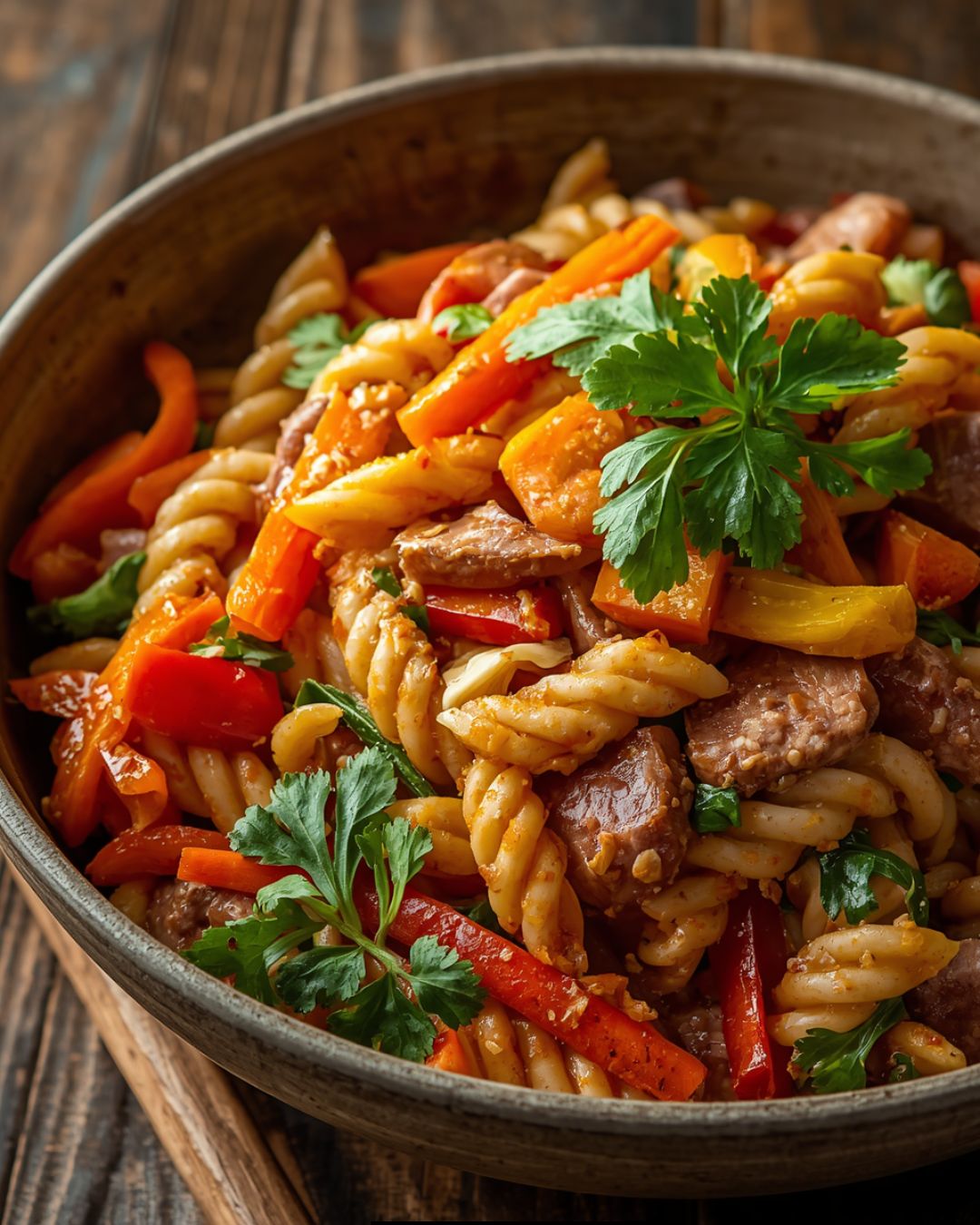
This Thai Pasta Salad with Peanut Sauce combines the best of Thai-inspired flavors with the simplicity of a comforting pasta salad, making it a crowd-pleaser for potlucks, packed lunches, or quick dinners.
Table of Contents
How to make Thai Pasta Salad with Peanut Sauce
Thai Pasta Salad with Peanut Sauce is a cold pasta salad that combines cooked pasta with crunchy vegetables, fresh herbs, and a creamy Thai-inspired peanut dressing.
Ingredients
For the Salad:
- Pasta (or noodles): 8–10 ounces (spaghetti, linguine, or rice noodles work great)
- 1 cup shredded purple cabbage
- 1 cup julienned carrots
- 1 cup bell peppers (red, yellow, or orange for sweetness), sliced thin
- ½ cup chopped cucumber
- Optional: Snap peas, edamame, or green beans for added crunch
- Protein (optional): 1 cup cooked and shredded chicken breast, grilled shrimp, or tofu (cubed and pan-fried)
Fresh garnishes:
- ¼ cup cilantro, finely chopped
- 2–3 green onions, sliced thin
- ¼ cup crushed roasted peanuts or sesame seeds
For the Peanut Sauce:
- ¼ cup creamy peanut butter
- 2 tablespoons soy sauce or tamari (if gluten-free)
- 1 tablespoon sesame oil
- 2 tablespoons fresh lime juice (about 1 lime)
- 1 teaspoon grated ginger
- 1 clove garlic, minced
- 1 tablespoon honey or brown sugar (for sweetness)
- 1 teaspoon chili paste (like sambal oelek), sriracha, or red pepper flakes (optional for heat)
- 2–3 tablespoons warm water (to thin the sauce, if needed)
Instructions
Step 1: Cook the Pasta
- Bring a large pot of salted water to a boil. Cook the pasta according to the package instructions until al dente.
- Drain and rinse the pasta with cold water to stop the cooking process. Toss with a drizzle of sesame oil to prevent sticking.
Step 2: Prepare the Peanut Sauce
- In a small mixing bowl, whisk together peanut butter, soy sauce, sesame oil, lime juice, grated ginger, minced garlic, and honey.
- Add chili paste or sriracha if you prefer a bit of heat.
- Gradually whisk in warm water, 1 tablespoon at a time, until the sauce reaches your desired consistency. It should be creamy but pourable.
Step 3: Assemble the Salad
- In a large mixing bowl, combine the cooked and cooled pasta with the prepared vegetables (cabbage, carrots, bell peppers, cucumber, and any extras like snap peas or edamame).
- Add the protein of choice (if using) to the bowl.
- Pour the peanut sauce over the pasta and vegetables. Use tongs or a large spoon to toss everything together until well coated.
Step 4: Garnish and Serve
- Transfer the salad to a serving dish.
- Garnish with fresh cilantro, green onions, crushed peanuts, and lime wedges for that final pop of flavor.
- Serve immediately or refrigerate for 30 minutes if you prefer a chilled salad.
Tips for Success
- Use Fresh Ingredients: Opt for crunchy, colorful vegetables for the best texture and freshness. Purple cabbage, carrots, and bell peppers are classics!
- Choose Your Favorite Noodles: If you’re looking for a more authentic Thai flavor, use rice noodles instead of traditional pasta.
- Adjust the Sauce: The peanut sauce can be customized to your taste! Add more lime juice for tanginess or a touch of honey for sweetness. Thin with warm water as needed.
- Make Ahead Friendly: Assemble the salad and store it in an airtight container for up to 3 days in the fridge. Just add cilantro and garnishes fresh before serving.
- Spice It Up: If you love heat, sprinkle on some extra red pepper flakes, drizzle sriracha, or add Thai chili slices for a fiery kick.
Ingredients Substitutes
One of the beautiful things about making a Thai Pasta Salad with Peanut Sauce is its flexibility! You can easily swap ingredients based on your dietary preferences, allergies, or what you have in your kitchen.
1. Pasta or Noodles
The base of your salad is typically made with pasta or noodles, but there are plenty of options:
Traditional Spaghetti or Linguine: Replace with:
- Rice Noodles: Perfect for a gluten-free option and closer to traditional Thai cuisine.
- Soba Noodles: A great choice for a nutty flavor and a hearty texture.
- Zucchini Noodles (Zoodles): For a low-carb or keto-friendly version.
- Whole Wheat Pasta: For extra fiber and a nuttier taste.
- Chickpea or Lentil Pasta: Adds protein for a more filling and gluten-free alternative.
- Glass Noodles (Mung Bean Noodles): A light and translucent option often used in Asian dishes.
2. Peanut Butter
The peanut butter is central to the sauce, but some substitutes still provide that signature creaminess:
- Sunflower Seed Butter: A nut-free substitute that works well for those with peanut allergies.
- Almond Butter: Slightly sweeter, but still creamy and delicious.
- Tahini (Sesame Paste): A unique nut-free and slightly tangy substitute, though the flavor will be slightly different.
- Cashew Butter: Creamy and sweet, with a mild flavor perfect as a substitute.
- Soy Butter (SunButter): Great for nut-free diets!
3. Soy Sauce
Soy sauce adds the necessary umami and saltiness to the peanut sauce, but there are some easy swaps:
- Tamari: A gluten-free alternative that’s nearly identical in flavor.
- Coconut Aminos: Perfect for a soy-free and gluten-free option with milder sweetness.
- Liquid Aminos: A healthier alternative to soy sauce with a salty, umami flavor.
- Fish Sauce: If soy-free, this is a flavorful ingredient common in Thai cuisine, though it’s not suitable for vegetarians/vegans.
4. Honey or Sweetener
The sweetness balances the savory and tangy notes of the sauce. Here are some substitutes:
- Maple Syrup: Works well for a vegan option.
- Agave Syrup: Another vegan alternative that’s easily interchangeable.
- Coconut Sugar or Brown Sugar: Adds sweetness, though these will slightly thicken the sauce.
- Date Syrup or Pureed Dates: A natural sweetener that adds a subtle fruitiness.
- Stevia or Monk Fruit Sweetener: Great for a low-calorie, low-carb choice (adjust quantities, as these are more potent).
Final Thoughts
Not only is this Thai Pasta Salad with Peanut Sauce bursting with flavors and textures, but it’s also incredibly versatile. It works equally well as a satisfying entrée or a shareable side dish.
More Salad Recipes:

Ingredients
For the Salad:
- Pasta (or noodles): 8–10 ounces
- 1 cup shredded purple cabbage
- 1 cup julienned carrots
- 1 cup bell peppers
- ½ cup chopped cucumber
- Optional: Snap peas
- Protein (optional): 1 cup cooked and shredded chicken breast
Fresh garnishes:
- ¼ cup cilantro, finely chopped
- 2–3 green onions, sliced thin
- ¼ cup crushed roasted peanuts
For the Peanut Sauce:
- ¼ cup creamy peanut butter
- 2 tablespoons soy sauce or tamari
- 1 tablespoon sesame oil
- 2 tablespoons fresh lime juice (about 1 lime)
- 1 teaspoon grated ginger
- 1 clove garlic, minced
- 1 tablespoon honey or brown sugar
- 1 teaspoon chili paste
- 2–3 tablespoons warm water
Instructions
Step 1: Cook the Pasta
- Bring a large pot of salted water to a boil. Cook the pasta according to the package instructions until al dente.
- Drain and rinse the pasta with cold water to stop the cooking process. Toss with a drizzle of sesame oil to prevent sticking.
Step 2: Prepare the Peanut Sauce
- In a small mixing bowl, whisk together peanut butter, soy sauce, sesame oil, lime juice, grated ginger, minced garlic, and honey.
- Add chili paste or sriracha if you prefer a bit of heat.
- Gradually whisk in warm water, 1 tablespoon at a time, until the sauce reaches your desired consistency. It should be creamy but pourable.
Step 3: Assemble the Salad
- In a large mixing bowl, combine the cooked and cooled pasta with the prepared vegetables (cabbage, carrots, bell peppers, cucumber, and any extras like snap peas or edamame).
- Add the protein of choice (if using) to the bowl.
- Pour the peanut sauce over the pasta and vegetables. Use tongs or a large spoon to toss everything together until well coated.
Step 4: Garnish and Serve
- Transfer the salad to a serving dish.
- Garnish with fresh cilantro, green onions, crushed peanuts, and lime wedges for that final pop of flavor.
- Serve immediately or refrigerate for 30 minutes if you prefer a chilled salad.
Discover more from Heavnly Foods
Subscribe to get the latest posts sent to your email.