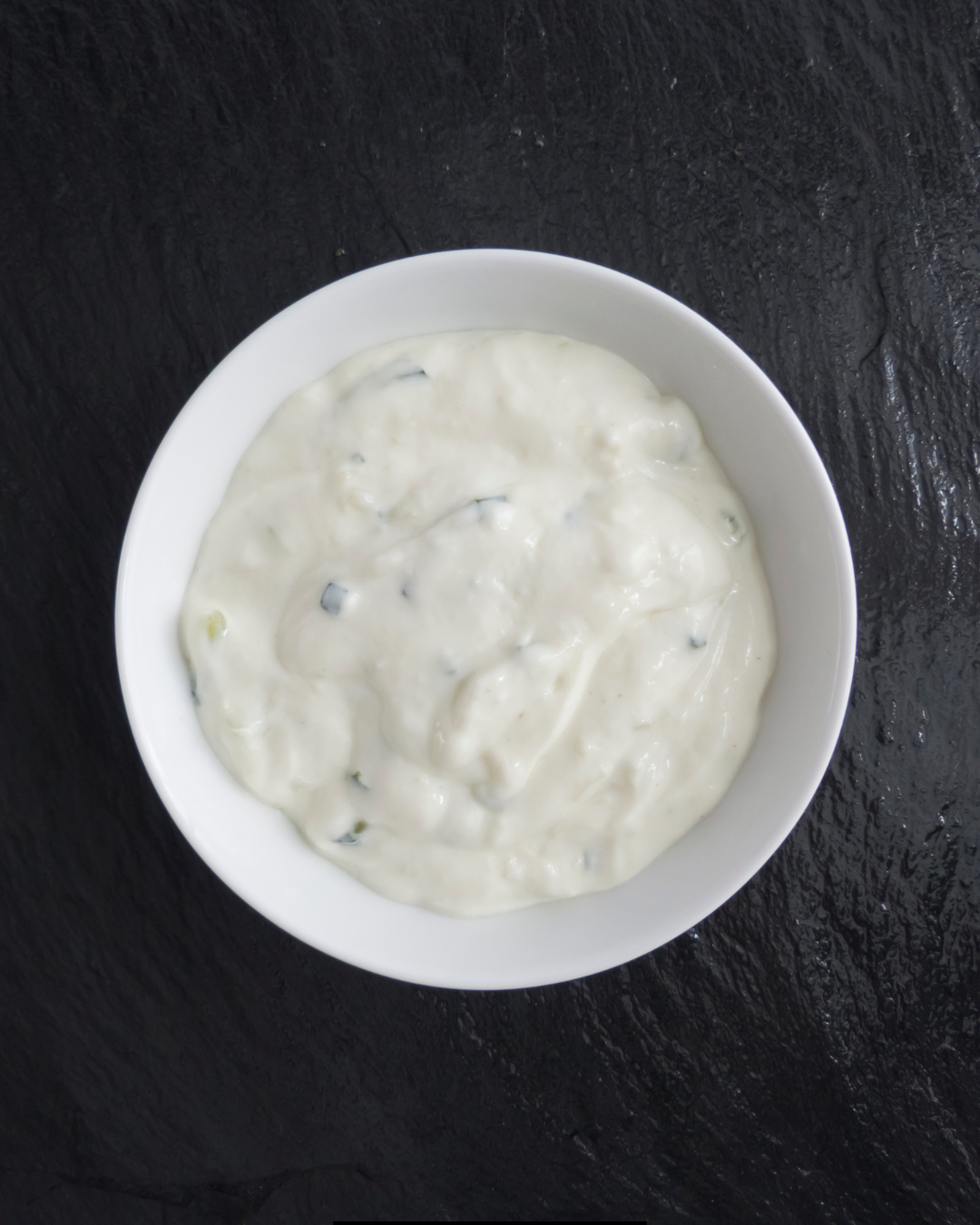
When you think of tzatziki, you likely picture the creamy, tangy Greek yogurt-based sauce studded with crisp bits of cucumber. But what if you don’t have cucumbers on hand—or want to explore a fresh twist on this classic? The tzatziki sauce without cucumber is a delightful variation that delivers all the bold flavors you love while offering a chance to experiment with alternative ingredients.
Table of Contents
How to make Tzatziki Sauce without Cucumber
Tzatziki sauce without cucumber is a variation of traditional Greek tzatziki that retains its creamy, tangy, garlicky character while omitting the cucumber.
Ingredients
Here’s what you’ll need to create a tzatziki sauce without cucumber:
Core Ingredients:
- Greek Yogurt – 1 cup (full-fat recommended for maximum creaminess; you may use plain regular yogurt if needed, but drain excess liquid to avoid a runny sauce).
- Garlic – 1 to 2 cloves (grated or finely minced, depending on how much garlic intensity you prefer).
- Lemon Juice – 1 tablespoon (freshly squeezed for brightness).
- Fresh Dill – 2 tablespoons (finely chopped; you can substitute with mint for a slightly sweeter twist).
- Olive Oil – 1 tablespoon (optional, adds richness and smoothness).
- Salt – ½ teaspoon (to enhance overall flavor).
- Pepper – A pinch (optional, for a subtle kick).
Substitute for Cucumber (Optional):
If you’re looking for a crunchy or textural element to replace cucumber, consider:
- Grated Zucchini: Press out excess water before using.
- Grated Carrot – Brings a mild sweetness and vibrant color.
- Chopped Spinach: Finely slice fresh spinach leaves for a herby addition.
- Radishes – Diced or grated for a peppery and crunchy alternative.
- Skip entirely if you prefer the sauce to be smooth!
Instructions
- If using substitute vegetables (like zucchini or carrot), grate them and press out excess moisture with a cheesecloth or paper towel to prevent the sauce from becoming too watery.
- Mince or grate the garlic finely. Chop the dill or mint. Freshly squeeze your lemon juice.
- In a medium-sized bowl, add the Greek yogurt, grated garlic, and lemon juice. Stir well until smooth.
- Add the fresh dill (or mint) to the yogurt mixture and stir to distribute evenly.
- If you’re using a vegetable substitute for a cucumber, fold it into the mixture gently. This will add texture and flavor to the sauce.
- Add salt and pepper to taste, adjusting the seasoning to your preferences. You can add a drizzle of olive oil for a richer consistency.
- Cover the sauce and refrigerate it for at least 30 minutes (or up to 2 hours) before serving to allow the flavors to meld together.
Tips for the Best Cucumber-Free Tzatziki
- If your yogurt is watery, strain it through a cheesecloth or fine-mesh sieve for about an hour before making the sauce. This step is especially important if you’re aiming for a thicker dip-like sauce.
- Fresh dill or mint makes a huge difference. Avoid dried herbs in this recipe, as they won’t deliver the same burst of flavor.
- Don’t skip the lemon juice! It balances the richness of the yogurt and olive oil by adding brightness and tang.
- If using zucchini or any high-water-content vegetable as a cucumber replacement, make sure to extract the water using a cheesecloth or pressing method.
- Garlic can range from subtle to bold depending on your palate. Start with one clove and increase if you want a punchier flavor.
How to Serve
Your cucumber-free tzatziki sauce pairs beautifully with a wide variety of dishes. Here are some ideas:
- As a dip for crudités, pita bread, or chips.
- A refreshing sauce for grilled meats, seafood, or roasted vegetables.
- A tasty spread for wraps or sandwiches.
- A dollop on salads or alongside grains like rice, quinoa, or bulgur.
Ingredients Substitutes
Cucumber is traditionally a key ingredient in tzatziki sauce, bringing refreshing crunch and moisture to the dish. However, if you’re avoiding cucumber due to allergies or dietary preferences, or if you don’t have it on hand, plenty of alternatives can step in to preserve the texture, flavor, or uniqueness of this creamy Greek sauce.
1. Zucchini (Grated)
Zucchini is one of the best alternatives to a cucumber. It shares a mild flavor and can mimic the refreshing quality of cucumber without being overpowering.
Preparation: Grate the zucchini finely and press it in a cheesecloth or paper towel to remove excess moisture before using.
Benefits: Neutral, light taste that blends seamlessly into the yogurt without overwhelming other flavors. Zucchini also adds a subtle crunch.
Best For: A close match to the original tzatziki texture.
2. Grated Carrot
Carrot lends a slightly sweet flavor and vibrant orange hue to the sauce, creating a fun and colorful twist.
Preparation: Peel and grate the carrot finely. If moisture is a concern, lightly press or blot it with paper towels.
Benefits: Adds a touch of sweetness and crunch. Carrot also complements garlic and lemon beautifully.
Best For: A sweeter, earthier variety of tzatziki.
3. Radishes (Grated or Diced)
Radishes are a bold alternative with their peppery, slightly spicy bite. They add a distinct flavor and crunch to the tzatziki.
Preparation: Thinly slice, grate, or dice radishes to your preferred texture. If using larger radishes, remove excess water after slicing.
Benefits: Provides a crunchy texture and adds an exciting burst of spiciness to the sauce. Balances well with creamy yogurt.
Best For: Those who prefer a sharper, more savory variation.
4. Chopped Spinach
Spinach brings a herby, leafy texture to the sauce instead of crunch, making it ideal for those who want a smoother tzatziki without vegetables.
Preparation: Wash and finely chop fresh spinach, then mix it directly into the yogurt. Avoid cooking spinach for this recipe to retain the raw, green flavor.
Benefits: Adds vitamins and fresh, herbaceous notes to the sauce. It blends nicely with dill, garlic, and mint.
Best For: A greener, more herb-forward version of tzatziki.
5. Celery (Finely Chopped)
Celery is a great low-calorie substitute for cucumber, adding crunch and a subtle vegetal flavor.
Preparation: Dice celery into very fine pieces or chop it thinly to avoid overpowering the sauce. Use the tender inner stalks for better texture.
Benefits: Brings crunch and mildly salty, vegetal undertones (especially if cucumbers are too sweet for you).
Best For: Those who enjoy a crispy texture without sweetness.
6. Parsnips (Grated)
Parsnips add a unique sweetness and earthy undertone to tzatziki, making your sauce slightly richer and more distinctive than the traditional flavor.
Preparation: Peel and grate the parsnip finely. If desired, you can lightly blanch it, though raw grated parsnip works just as well.
Benefits: Earthy and sweet, parsnips can stand out in your tzatziki as a hearty replacement for cucumber.
Best For: A deeper, winter-inspired variation.
Final Thoughts
This Tzatziki Sauce without Cucumber proves you can enjoy the creamy, tangy goodness of a classic Greek dish even without cucumbers!
More Sauce Recipes:

Ingredients
- Greek Yogurt – 1 cup
- Garlic – 1 to 2 cloves
- Lemon Juice – 1 tablespoon (freshly squeezed for brightness).
- Fresh Dill – 2 tablespoons
- Olive Oil – 1 tablespoon (optional, adds richness and smoothness).
- Salt – ½ teaspoon (to enhance overall flavor).
- Pepper – A pinch (optional, for a subtle kick).
Substitute for Cucumber (Optional):
If you’re looking for a crunchy or textural element to replace cucumber, consider:
- Grated Zucchini: Press out excess water before using.
- Grated Carrot – Brings a mild sweetness and vibrant color.
- Chopped Spinach: Finely slice fresh spinach leaves for a herby addition.
- Radishes – Diced or grated for a peppery and crunchy alternative.
- Skip entirely if you prefer the sauce to be smooth!
Instructions
- If using substitute vegetables (like zucchini or carrot), grate them and press out excess moisture with a cheesecloth or paper towel to prevent the sauce from becoming too watery.
- Mince or grate the garlic finely. Chop the dill or mint. Freshly squeeze your lemon juice.
- In a medium-sized bowl, add the Greek yogurt, grated garlic, and lemon juice. Stir well until smooth.
- Add the fresh dill (or mint) to the yogurt mixture and stir to distribute evenly.
- If you're using a vegetable substitute for a cucumber, fold it into the mixture gently. This will add texture and flavor to the sauce.
- Add salt and pepper to taste, adjusting the seasoning to your preferences. You can add a drizzle of olive oil for a richer consistency.
- Cover the sauce and refrigerate it for at least 30 minutes (or up to 2 hours) before serving to allow the flavors to meld together.