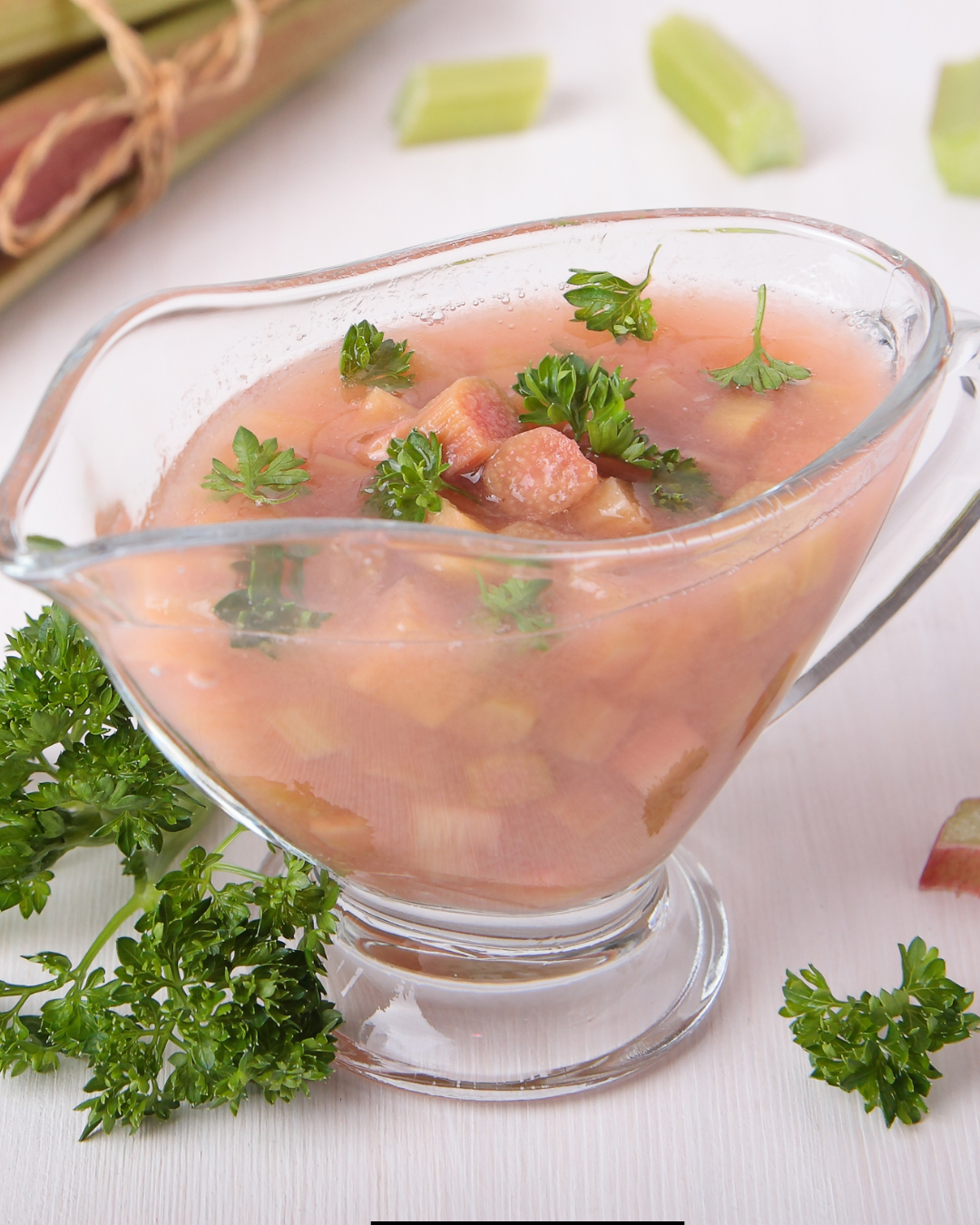
If you’re like me and love bringing unexpected ingredients into your cooking, Rhubarb Sauce for Pork is the star you didn’t know your pork dishes needed.
Table of Contents
How to make Rhubarb Sauce for Pork
Rhubarb Sauce for Pork is a sweet-tart sauce made from cooked rhubarb, often combined with sugar, fruit juice, honey, spices, or aromatics, and served alongside pork dishes. Its bright acidity helps balance the rich, savory flavor of pork in much the same way that applesauce is traditionally paired with pork.
Ingredients
This recipe makes about 1 ½ – 2 cups of sauce.
- 2 cups rhubarb, fresh or frozen (chopped into ½-inch pieces)
- ¾ cup sugar (adjust to taste; you can use brown sugar for a deeper flavor or white sugar for a cleaner sweetness)
- ½ cup water (or apple juice for added sweetness)
- 1 tablespoon apple cider vinegar (for a subtle tart kick)
- 1 small shallot or ½ small onion, finely chopped (optional, for added depth)
- 1 teaspoon grated fresh ginger (optional, for a bit of warmth)
- ¼ teaspoon ground cinnamon (optional, for a warm spiced note)
- Pinch of salt (to balance the flavor)
Optional Additions:
- ½ teaspoon orange zest (for brightness)
- 1 tablespoon honey or maple syrup (for complexity if needed)
- Fresh thyme or rosemary (a small sprig; remove after cooking, if desired)
Instructions
- If using fresh rhubarb, wash and trim the stalks, then cut them into small, uniform pieces for even cooking. If your rhubarb is frozen, thaw it slightly before using. Finely chop any aromatics (shallot, onion, or ginger) as needed.
- In a medium saucepan, heat a teaspoon of oil over medium heat. Add the shallot or onion and ginger (if using) and sauté for 2-3 minutes, until softened and fragrant.
- Add the rhubarb pieces, water (or apple juice), and sugar to the pan. Stir everything together, then reduce the heat to low and let it simmer gently. Cook for 10-15 minutes, stirring occasionally, until the rhubarb breaks down into a soft, jam-like consistency.
- Stir in the apple cider vinegar, cinnamon (if using), and a pinch of salt. Taste the sauce and adjust the sweetness or acidity as needed. You can add more sugar, a drizzle of honey or maple syrup, or a splash of vinegar depending on your preference.
- If using herbs, like thyme or rosemary, add them at this stage and simmer for another 2-3 minutes to infuse the sauce with their flavor. Remove the herbs before serving.
- Once the rhubarb sauce has thickened to your desired consistency (it should coat the back of a spoon), remove it from the heat and let it cool slightly before serving. You can serve it warm or at room temperature.
Tips for Making the Perfect Rhubarb Sauce
- Rhubarb is naturally quite tart, so you may need to adjust the sweetness to your liking. Start with the recommended sugar and add more in small amounts if needed.
- For natural sweetness, use honey or maple syrup instead of white sugar.
- For a chunkier sauce, avoid completely breaking down the rhubarb while cooking.
- Blend the sauce after cooking (using an immersion blender) for a smooth texture.
- Add 1 tablespoon of balsamic vinegar for a more complex, slightly richer flavor.
- Incorporate dried fruits like raisins, chopped dates, or cranberries for a sweet-tart texture.
- For some heat, add a pinch of red pepper flakes.
- This sauce keeps well in the fridge for up to a week. Store it in an airtight container, and reheat gently before serving.
- You can freeze the sauce for up to 3 months. Thaw and reheat on the stove or in the microwave.
- This sauce is excellent with grilled or roasted pork loin, pork chops, or ribs. Try spooning it over the meat or serving it as a side condiment.
Ingredients Substitutes
Creating the perfect rhubarb sauce doesn’t always require strict adherence to the original ingredients. Sometimes, you might need substitutes due to dietary preferences, what’s available in your pantry, or to experiment with flavors.
Substitute for Rhubarb
Rhubarb is the star of this sauce, but you can replace it with other fruits or tangy ingredients if rhubarb is unavailable.
- Cranberries: Fresh or frozen cranberries deliver a similarly tart flavor. Adjust the sugar amount since cranberries are typically more sour.
- Gooseberries: Gooseberries have a tart and slightly floral flavor, making them an excellent substitute for rhubarb.
- Tart Apples: Use Granny Smith apples if you want something less sour but still tangy. Peel, chop, and cook them in the same way.
- Plums: Red or green plums can create a sweet-tart sauce with a smoother texture.
- Apricots: Fresh apricots (or even dried ones rehydrated) provide a slightly tangy and sweet alternative.
Sugar Substitutes
Sugar balances the tartness of rhubarb, but substitutions can be made to suit your preferences:
- Honey: Adds natural sweetness and a touch of floral flavor. Reduce the amount slightly because honey is sweeter than sugar.
- Maple Syrup: Provides warmth and depth to the sauce. Start with ½ cup and adjust as needed.
- Agave Nectar: Another natural alternative, though it’s quite sweet, so use sparingly.
- Brown Sugar: Adds a molasses-like richness to the sauce that complements pork beautifully.
- Stevia or Monk Fruit Sweetener: For a sugar-free option, use natural sweeteners, but start with small amounts, as they can be more concentrated.
- Date Sugar: A healthier option that adds sweetness along with a slight fruity flavor.
Water Substitutes
The recipe typically uses water to create steam and help the rhubarb break down. For added flavor, consider these replacements:
- Apple Juice: Naturally sweet and enhances the fruity flavor of the sauce.
- Orange Juice: Adds brightness and acidity to the sauce.
- White Wine: A splash of dry white wine adds complexity to the flavor (especially for a more “gourmet” touch). Cook the alcohol off.
- Chicken Stock: If you prefer a more savory sauce, using a light chicken stock can create a richer base.
Apple Cider Vinegar Substitutes
Vinegar adds tang to the sauce and balances the sweetness. If you don’t have apple cider vinegar, try these options:
- Lemon Juice: A natural acidic option that adds brightness and freshness.
- White Vinegar: Stronger than apple cider vinegar; use half the amount.
- Rice Vinegar: Milder and slightly sweeter than apple cider vinegar.
- Balsamic Vinegar: Adds a complex, sweet tang to the sauce (use sparingly).
- Red Wine Vinegar: A slightly stronger acidic option with fruity undertones.
Shallot or Onion Substitutes
Shallots or onions add depth to the sauce, but you don’t need to stick strictly to them:
- Garlic: Finely minced garlic can replace shallots for a sharper flavor with a savory undertone.
- Leeks: Use the white and light green parts of leeks for a milder, sweeter flavor.
- Scallions (Green Onions): Use the white parts for a milder onion flavor in the sauce.
- Onion Powder: In a pinch, a small amount of onion powder can provide a subtle hint of onion flavor.
Ginger Substitutes
Ginger adds warmth and a gentle “zing” to the sauce. If you don’t have fresh ginger, these substitutes work well:
- Ground Ginger: Use about ¼ teaspoon for every teaspoon of fresh ginger.
- Garlic Powder or Fresh Garlic: For a savory variation, though garlic lacks ginger’s warmth.
- Cardamom: Adds a touch of exotic spiciness that mimics ginger in small quantities.
- Nutmeg or Allspice: Works well in sweeter variations of the sauce.
Cinnamon Substitutes
If you want that hint of spice but don’t have cinnamon, try these alternatives:
- Nutmeg: Adds warm, nutty flavors. Use sparingly to avoid overpowering the sauce.
- Allspice: Offers a complex flavor similar to cinnamon.
- Cloves: A pinch adds bold, sweet spiciness.
- Pumpkin Pie Spice: A blend of cinnamon, nutmeg, and other warming spices that works well here.
Salt Substitutes
Salt balances the flavors, but you can use alternatives:
- Soy Sauce: Adds savory depth and a hint of umami. Use in very small quantities to avoid overpowering the sweetness.
- Seaweed Powder or Flakes: For a hint of salty umami flavor without traditional salt.
- Celery Salt: Adds both saltiness and a subtle herbal note.
Final Thoughts
With its beautiful balance of sweet and tangy notes, this rhubarb sauce is surprisingly versatile and can even double as a spread for bread, a glaze for chicken, or a topping for roasted vegetables.
More Rhubarb Recipes:

Ingredients
- 2 cups rhubarb, fresh or frozen (chopped into ½-inch pieces)
- ¾ cup sugar
- ½ cup water (or apple juice for added sweetness)
- 1 tablespoon apple cider vinegar (for a subtle tart kick)
- 1 small shallot or ½ small onion, finely chopped
- 1 teaspoon grated fresh ginger (optional, for a bit of warmth)
- ¼ teaspoon ground cinnamon (optional, for a warm spiced note)
- Pinch of salt
Optional Additions:
- ½ teaspoon orange zest (for brightness)
- 1 tablespoon honey or maple syrup
- Fresh thyme or rosemary
Instructions
- If using fresh rhubarb, wash and trim the stalks, then cut them into small, uniform pieces for even cooking. If your rhubarb is frozen, thaw it slightly before using. Finely chop any aromatics (shallot, onion, or ginger) as needed.
- In a medium saucepan, heat a teaspoon of oil over medium heat. Add the shallot or onion and ginger (if using) and sauté for 2-3 minutes, until softened and fragrant.
- Add the rhubarb pieces, water (or apple juice), and sugar to the pan. Stir everything together, then reduce the heat to low and let it simmer gently. Cook for 10-15 minutes, stirring occasionally, until the rhubarb breaks down into a soft, jam-like consistency.
- Stir in the apple cider vinegar, cinnamon (if using), and a pinch of salt. Taste the sauce and adjust the sweetness or acidity as needed. You can add more sugar, a drizzle of honey or maple syrup, or a splash of vinegar depending on your preference.
- If using herbs, like thyme or rosemary, add them at this stage and simmer for another 2-3 minutes to infuse the sauce with their flavor. Remove the herbs before serving.
- Once the rhubarb sauce has thickened to your desired consistency (it should coat the back of a spoon), remove it from the heat and let it cool slightly before serving. You can serve it warm or at room temperature.
Discover more from Heavnly Foods
Subscribe to get the latest posts sent to your email.