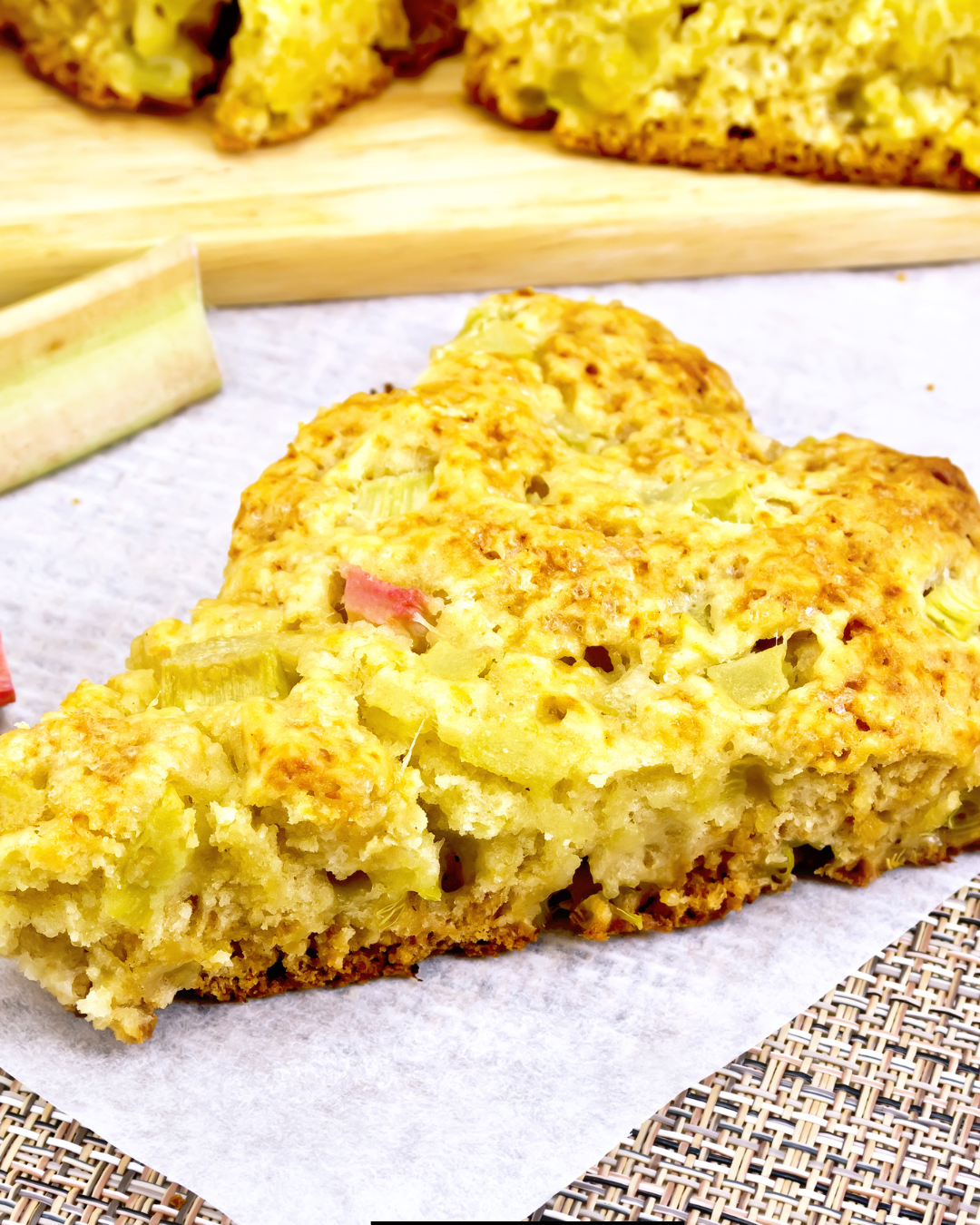
If you’re anything like me, you’ve probably got a soft spot for unique flavor combinations—especially the kind that balance sweet and tart in perfect harmony. As someone who loves experimenting with seasonal produce, Rhubarb Scones with Buttermilk holds a special place in my kitchen. Its bright, slightly tart flavor shines in both sweet and savory dishes, but there’s just something magical about baking it into warm, fluffy scones.
Table of Contents
How to make Rhubarb Scones with Buttermilk
Rhubarb Scones with Buttermilk are tender, lightly sweet baked pastries made with fresh rhubarb and buttermilk. They are a variation of traditional scones, with the tart flavor of rhubarb balancing the rich, buttery dough.
Ingredients
Here’s everything you’ll need to create these scones:
- 2 ½ cups (310 g) all-purpose flour
- ⅓ cup (65 g) granulated sugar (plus a little extra for sprinkling on top)
- 1 tablespoon baking powder
- ½ teaspoon baking soda
- ½ teaspoon salt
- ½ cup (115 g) unsalted butter, cold and cubed
- ¾ cup (150 g) diced fresh rhubarb (cut into small, ½-inch pieces)
- ¾ cup (180 ml) buttermilk (cold, plus extra for brushing)
- 1 large egg (optional, for extra richness and color)
- 1 teaspoon vanilla extract (optional, for subtle flavor)
Instructions
- Preheat your oven to 400°F (200°C) and line a baking sheet with parchment paper.
- Wash and dice the rhubarb into small, even pieces. If your rhubarb is extra tart, you can toss the pieces lightly with a teaspoon of sugar beforehand.
- In a large mixing bowl, whisk together the flour, sugar, baking powder, baking soda, and salt until well combined.
- Cut the cold butter into small cubes and add it to the dry ingredients.
- Use a pastry blender, two forks, or your fingertips to rub the butter into the flour mixture until it resembles coarse crumbs (pea-sized pieces are okay).
- Toss the diced rhubarb into the butter-flour mixture, making sure it’s evenly distributed.
- In a small bowl, whisk together the buttermilk, egg, and vanilla extract (if using).
- Make a well in the center of the dry mixture and pour the wet ingredients into it. Gently stir with a wooden spoon or spatula until a soft dough forms.
- Tip: Avoid overmixing—overworking the dough can make your scones tough.
- Lightly dust your work surface with flour and turn the dough out onto it.
- Gently pat the dough into a round disk, about 1-inch thick.
- Use a sharp knife or a dough cutter to divide the disk into 8 triangular wedges (or use a round cutter for circular scones).
- Arrange the scones on the prepared baking sheet, leaving space between each one.
- Brush the tops lightly with buttermilk and sprinkle with a pinch of sugar for a golden, slightly sweet finish.
- Bake for 20–22 minutes, or until the scones are golden and firm to the touch.
- Allow the scones to cool for a few minutes on the baking sheet before transferring them to a wire rack.
- Serve warm, with a dollop of butter, clotted cream, or jam, and enjoy!
Tips for the Perfect Rhubarb Scones
- Use Cold Ingredients: Keep your butter and buttermilk cold to ensure flaky scones. Warm butter melts prematurely, preventing the dough from forming those desirable layers.
- Don’t Overmix: To keep the scones tender, mix the dough until just combined. Overmixing can develop the gluten in the flour, resulting in dense scones.
- Chill Before Baking: If your kitchen is warm and the dough feels soft, refrigerate the cut scones for 15–20 minutes before baking. This helps them hold their shape.
- Enhance the Glaze: For an extra-special finish, mix powdered sugar with a drizzle of milk or lemon juice to create a glaze and drizzle it over the cooled scones.
- Adjust the Sweetness: If rhubarb is too tart for your liking, you can macerate the diced rhubarb with sugar for 10–15 minutes before adding it to the dough.
Ingredients Substitutes
If you’re eager to make Rhubarb Scones but need to swap out some ingredients due to dietary restrictions, preferences, or simply missing items in your pantry, here’s a detailed guide to ingredient substitutes that will keep your scones delicious!
1. Rhubarb
If you don’t have fresh rhubarb or want to explore other fruits:
- Strawberries: Strawberries pair beautifully with tart flavors and can be used fresh or lightly macerated.
- Apples: Diced apples (preferably tart varieties like Granny Smith) work well and add a natural sweetness.
- Berries: Blueberries, raspberries, or blackberries are great alternatives for a fruity burst.
- Cherries: Pitted and diced cherries add a juicy sweetness.
2. Buttermilk
Buttermilk adds tanginess and tenderness to the scones, but if you don’t have any:
- Milk + Lemon Juice or Vinegar: Mix ¾ cup of milk with 1 tablespoon of lemon juice or white vinegar. Let it sit for 5–10 minutes to curdle.
- Plain Yogurt: Use the same amount of plain yogurt (or Greek yogurt) to replace buttermilk. Thin yogurt with a small amount of water or milk to match the consistency of buttermilk.
- Sour Cream: Sour cream can be used in equal amounts, but dilute it slightly to avoid overly dense scones.
3. All-Purpose Flour
To make the recipe gluten-free or explore healthier options, use:
- Gluten-Free Flour Blend: Use a 1:1 gluten-free baking blend that mimics the texture of regular flour.
- Whole Wheat Flour: Replace half of the all-purpose flour with whole wheat flour for a heartier, nuttier scone. Be aware that this might make the scones denser.
- Almond Flour: Combine almond flour with a binding agent like tapioca starch. This works better in combination with gluten-free flour rather than as a direct substitute.
4. Granulated Sugar
For sweetness alternatives, try:
- Brown Sugar: Light or dark brown sugar can add a richer, more caramel flavor.
- Honey or Maple Syrup: Replace ⅓ cup of sugar with the same amount of honey or maple syrup. Reduce the buttermilk slightly so the dough doesn’t get too wet.
- Coconut Sugar: A lovely, natural sugar substitute that adds a subtle molasses-like flavor.
5. Unsalted Butter
Butter is responsible for the crumbly texture, but if needed, you can use:
- Coconut Oil: Use solid coconut oil in the same amount as butter. Choose unrefined coconut oil for a neutral flavor.
- Plant-Based Butter: If you’re making the recipe vegan, dairy-free butter substitutes work perfectly.
- Vegetable Shortening: Shortening can mimic butter’s texture, but it lacks the rich flavor.
6. Egg (Optional)
Eggs are often added to enrich scones, but they can be omitted or replaced:
- No Egg: Leave the egg out; your scones will still bake beautifully.
- Flaxseed Meal: Mix 1 tablespoon of flaxseed meal with 2 ½ tablespoons of water to create an egg substitute. Let it sit for 5 minutes before adding it to the dough.
- Applesauce: Replace the egg with ¼ cup of unsweetened applesauce for added moisture and a hint of sweetness.
Final Thoughts
Rhubarb Scones with Buttermilk are as charming as they sound—bursting with sweet and tangy flavors, and so simple to make.
More Rhubarb Recipes:

Ingredients
- 2 ½ cups (310 g) all-purpose flour
- ⅓ cup (65 g) granulated sugar
- 1 tablespoon baking powder
- ½ teaspoon baking soda
- ½ teaspoon salt
- ½ cup (115 g) unsalted butter, cold and cubed
- ¾ cup (150 g) diced fresh rhubarb
- ¾ cup (180 ml) buttermilk (cold, plus extra for brushing)
- 1 large egg (optional, for extra richness and color)
- 1 teaspoon vanilla extract
Instructions
- Preheat your oven to 400°F (200°C) and line a baking sheet with parchment paper.
- Wash and dice the rhubarb into small, even pieces. If your rhubarb is extra tart, you can toss the pieces lightly with a teaspoon of sugar beforehand.
- In a large mixing bowl, whisk together the flour, sugar, baking powder, baking soda, and salt until well combined.
- Cut the cold butter into small cubes and add it to the dry ingredients.
- Use a pastry blender, two forks, or your fingertips to rub the butter into the flour mixture until it resembles coarse crumbs (pea-sized pieces are okay).
- Toss the diced rhubarb into the butter-flour mixture, making sure it’s evenly distributed.
- In a small bowl, whisk together the buttermilk, egg, and vanilla extract (if using).
- Make a well in the center of the dry mixture and pour the wet ingredients into it. Gently stir with a wooden spoon or spatula until a soft dough forms.
- Tip: Avoid overmixing—overworking the dough can make your scones tough.
- Lightly dust your work surface with flour and turn the dough out onto it.
- Gently pat the dough into a round disk, about 1-inch thick.
- Use a sharp knife or a dough cutter to divide the disk into 8 triangular wedges (or use a round cutter for circular scones).
- Arrange the scones on the prepared baking sheet, leaving space between each one.
- Brush the tops lightly with buttermilk and sprinkle with a pinch of sugar for a golden, slightly sweet finish.
- Bake for 20–22 minutes, or until the scones are golden and firm to the touch.
- Allow the scones to cool for a few minutes on the baking sheet before transferring them to a wire rack.
- Serve warm, with a dollop of butter, clotted cream, or jam, and enjoy!

Ingredients
- 2 ½ cups (310 g) all-purpose flour
- ⅓ cup (65 g) granulated sugar (plus a little extra for sprinkling on top)
- 1 tablespoon baking powder
- ½ teaspoon baking soda
- ½ teaspoon salt
- ½ cup (115 g) unsalted butter, cold and cubed
- ¾ cup (150 g) diced fresh rhubarb (cut into small, ½-inch pieces)
- ¾ cup (180 ml) buttermilk (cold, plus extra for brushing)
- 1 large egg (optional, for extra richness and color)
- 1 teaspoon vanilla extract (optional, for subtle flavor)
Method
- Preheat your oven to 400°F (200°C) and line a baking sheet with parchment paper.
- Wash and dice the rhubarb into small, even pieces. If your rhubarb is extra tart, you can toss the pieces lightly with a teaspoon of sugar beforehand.
- In a large mixing bowl, whisk together the flour, sugar, baking powder, baking soda, and salt until well combined.
- Cut the cold butter into small cubes and add it to the dry ingredients.
- Use a pastry blender, two forks, or your fingertips to rub the butter into the flour mixture until it resembles coarse crumbs (pea-sized pieces are okay).
- Toss the diced rhubarb into the butter-flour mixture, making sure it’s evenly distributed.
- In a small bowl, whisk together the buttermilk, egg, and vanilla extract (if using).
- Make a well in the center of the dry mixture and pour the wet ingredients into it. Gently stir with a wooden spoon or spatula until a soft dough forms. Tip: Avoid overmixing—overworking the dough can make your scones tough.
Discover more from Heavnly Foods
Subscribe to get the latest posts sent to your email.